
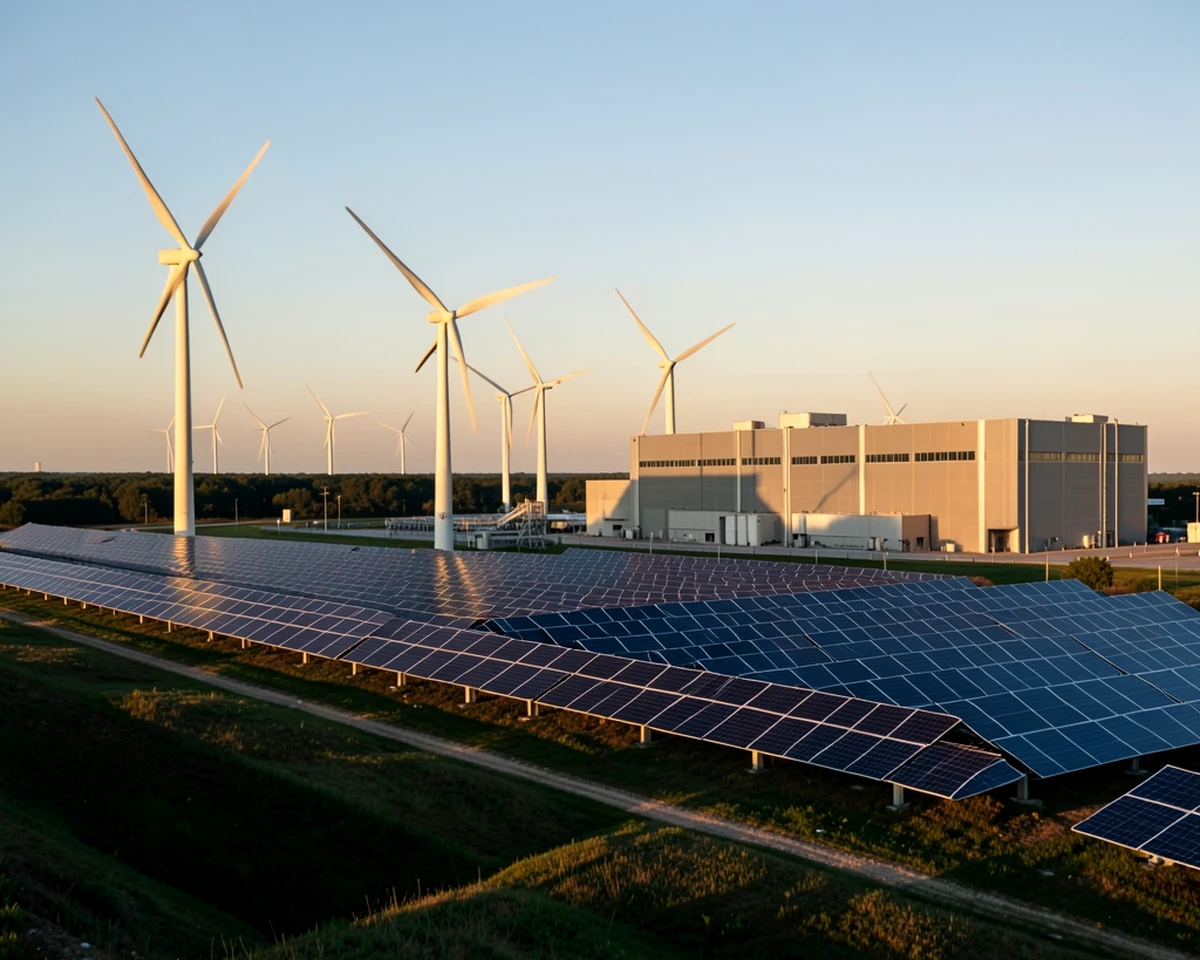
BOSTON — Electric utilities across the United States routinely throttle wind and solar farms to prevent grid overload, wasting growing volumes of clean electricity. A new study from the Massachusetts Institute of Technology (MIT) examines how that curtailed power could instead be routed directly to energy-intensive factories and data centers.
Why Clean Power Goes Unused
Variable renewable generation rarely aligns neatly with daily electricity demand. Solar output peaks at midday when household consumption dips, then drops rapidly at sunset just as families return home and switch on appliances. To keep the grid balanced, operators use curtailment—deliberately dialing back renewable generation when transmission lines or local demand cannot absorb the supply.
Limits of Current Battery Storage
Grid-scale batteries are widely viewed as the primary buffer for intermittent renewables, storing surplus electricity at peak generation and discharging it later. However, the MIT research notes that commercial battery systems currently hold power for only about four hours at a time. Longer-duration storage technologies remain in research and development and are not yet commercially scalable.
Matching Surplus Supply With Industrial Demand
Redirecting excess wind and solar output toward manufacturing plants and data centers offers a more immediate path to cutting emissions in some of the nation's highest-polluting sectors. While the concept of flexible industrial demand is not new, researchers emphasize that deploying it reliably will require better grid infrastructure and real-time data coordination.