
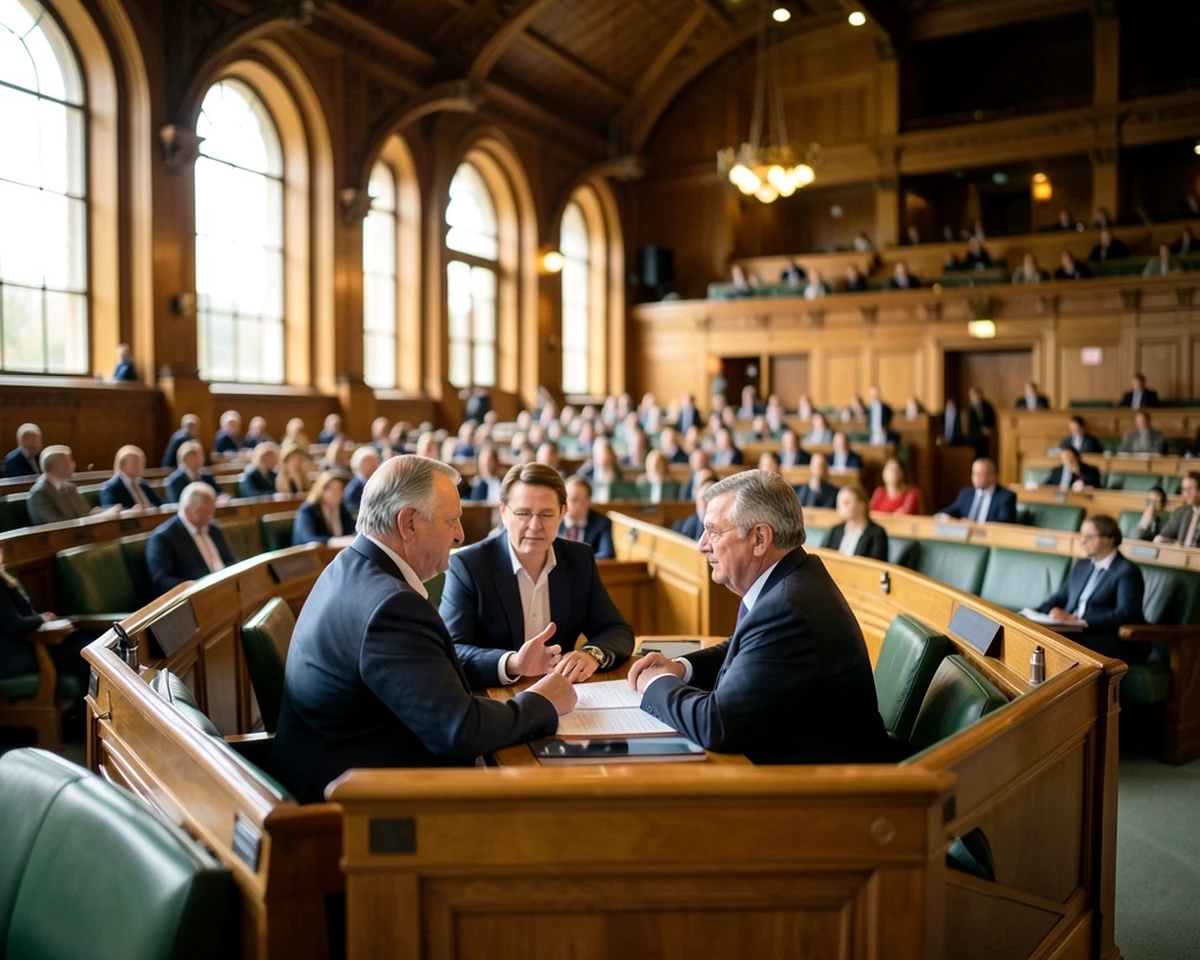
JERUSALEM — Israeli caretaker Prime Minister Benjamin Netanyahu has offered to let opposition leader Gadi Eisenkot serve first as prime minister under a rotating national unity government, signaling a major shift in deadlocked post-election talks.
A sudden concession ahead of the December deadline
In a social media statement on Saturday, Netanyahu said his responsibility as a leader required setting aside the principle of the largest party, adding that he would initially serve as alternate prime minister. The move came just one day after Eisenkot accused Netanyahu’s right-wing Likud party of stalling negotiations ahead of the 6 December deadline set by President Isaac Herzog.
Eisenkot, the former army chief who leads the centrist Yashar party, swiftly responded by inviting Netanyahu to his hotel for what he described as genuine and accelerated negotiations. Herzog had tasked Eisenkot earlier this month with forming a government within 28 days after consulting all parliamentary factions.
Parliamentary arithmetic leaves narrow options
Neither camp secured an outright majority in the 120-seat Knesset during October’s bitterly contested election. Netanyahu’s bloc won 53 seats, while Eisenkot’s Yashar party and three other Jewish opposition parties combined for 48 seats.
Meanwhile, two Arab-led alliances—the United Arab List and the Joint List—captured an unprecedented 19 seats following a surge in Arab voter turnout. Although that result positioned them as potential kingmakers, all but one of the Jewish parties pledged prior to the vote not to partner with them in a governing coalition, leaving a unity deal between Netanyahu and Eisenkot as one of the few viable paths forward.